
When one child needs to go into hospital, life can suddenly change for the whole family. While much of your attention naturally turns towards the child who is unwell, brothers and sisters at home may be trying to make sense of what is happening too.
They might be worried. They might miss their sibling or parent. They might have questions they are frightened to ask—or seem completely unconcerned one minute and become upset about something seemingly unrelated the next.
There isn’t a perfect script for explaining a hospital visit to siblings. What matters most is giving children honest, age-appropriate information, making space for their feelings and reminding them that they are still an important part of the family.
Tell Them What Is Happening in Simple Language
Children can often sense when adults are worried, even when nobody has explained why.
Without information, they may fill in the gaps themselves—and what they imagine can sometimes be more frightening than reality.
Try to explain what is happening using straightforward language appropriate to your child’s age.
For example:
“Sam needs to stay in hospital for a little while because the doctors need to help them get better.”
If you know what will happen next, explain that too. If you don’t know, it’s perfectly reasonable to say:
“We don’t know yet, but we’ll tell you when we know more.”
Try to avoid making promises you cannot guarantee, such as exactly when their sibling will come home.
Explain What a Hospital Is Like
If a sibling hasn’t experienced a hospital before, the word itself may sound frightening.
Explaining some everyday details can make it feel less mysterious. You might tell them that there will be doctors and nurses, that their sibling will have a hospital bed and that medical equipment helps staff look after people.
Depending on the circumstances, photographs or video calls may help children picture where their sibling is staying.
If they’re going to visit, prepare them for things that may look different. Their brother or sister might be wearing a hospital gown, have tubes or monitors attached, look tired or behave differently because of medication or illness.
Knowing about these things beforehand can make them less surprising.
Let Them Ask Questions
Children’s questions can be wonderfully direct:
“Will they get better?”
“Does it hurt?”
“Why can’t they come home?”
“Can I catch it?”
Some questions may be difficult to answer. You don’t need to have every answer.
Give children the information you know, using language they can understand. If you don’t know something, tell them that rather than guessing.
You can also ask:
“Is there anything you’re wondering or worried about?”
Remember that children may return to the same question several times. Repetition can be part of how they process unfamiliar or upsetting information.
Reassure Them About Things Children May Not Say Out Loud
Children can sometimes develop worries that adults would never expect.
A young child might wonder whether their sibling became ill because they argued with them. Another might worry that Mum or Dad won’t come home either.
Gently make important things explicit.
Tell them that they did not cause their sibling’s illness. Explain who will look after them, where they will sleep, who will take them to school and when they are likely to see or speak to you.
Small certainties can feel enormously reassuring when family life suddenly feels unpredictable.

Keep Everyday Routines Where Possible
Hospital stays can disrupt almost every aspect of family life.
Although normal routines won’t always be possible, keeping some familiar parts of the day can give siblings a sense of stability.
That might mean maintaining:
- School or nursery routines.
- Familiar bedtimes.
- Clubs and activities.
- Regular meals.
- A favourite bedtime story.
- Time with friends or grandparents.
Don’t worry if everything isn’t running exactly as usual. The goal isn’t perfection—it’s giving children some familiar anchors while other things are changing.
Help Siblings Stay Connected
Being separated from a brother or sister can be difficult, particularly during a long hospital stay.
Look for manageable ways to maintain their connection.
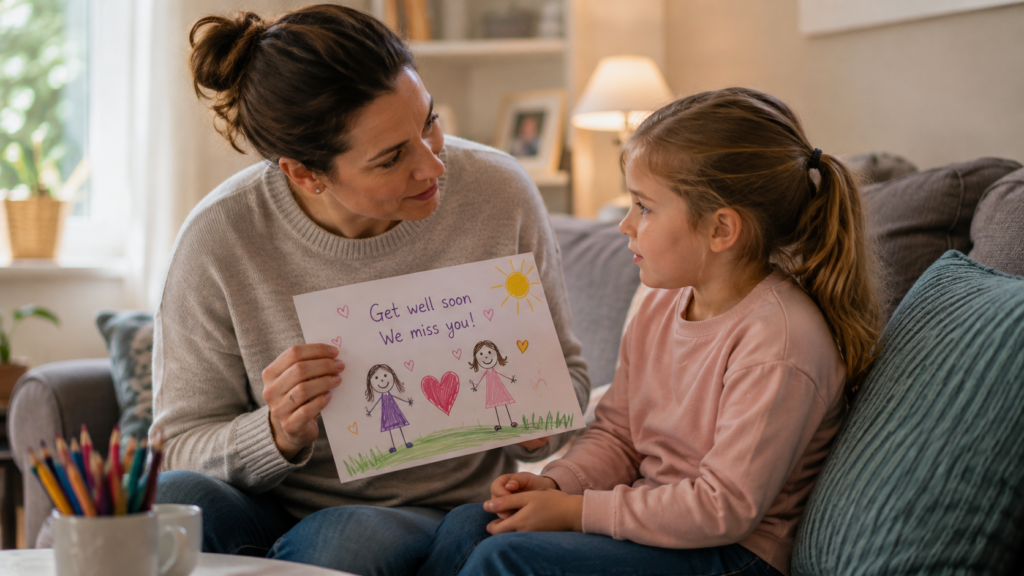
Children could draw pictures, make cards, record voice messages or choose something familiar to send into hospital. Where hospital rules and circumstances allow, video calls or visits can help too.
You could also involve the child at home in small decisions:
“Which book should we take in for your sister?”
“Would you like to draw something for his room?”
This can help them feel included rather than watching events happen from the outside.

Remember That Feelings Can Look Different in Children
Children don’t always express worry by saying, “I’m worried.”
Stress can sometimes appear as clinginess, irritability, trouble sleeping, changes in appetite, physical complaints or behaviour that seems younger than usual.
Other children may continue playing and laughing as though nothing unusual is happening.
That doesn’t necessarily mean they don’t care. Play and ordinary activities can provide an important break from difficult emotions.
Try to give children permission to feel whatever they feel—including happiness.
They don’t need to be sad all the time simply because their sibling is unwell.
Make Time for the Child at Home
When one child requires significant medical care, parents can understandably feel pulled in several directions at once.
If possible, create small moments of individual attention for siblings at home. It doesn’t have to be an elaborate day out.
Ten minutes reading together, a phone call from hospital, making breakfast together or asking about their day can communicate something important:
You still matter.
Friends and relatives can help here too. A trusted grandparent, aunt, uncle or family friend might maintain favourite activities and provide extra attention when parents need to be at the hospital.
Tell School or Nursery What’s Happening
Consider letting your child’s school, nursery or childcare setting know that their sibling is in hospital.
Teachers and other staff may notice changes in behaviour, concentration or emotions and can provide additional understanding and support.
For older children, ask what they are comfortable with other people knowing rather than assuming they want classmates to be told everything.
Family medical information remains personal, and children deserve some say in how their family’s circumstances are discussed.
When a Sibling Is Really Struggling
Some worry and disruption are understandable when a brother or sister is in hospital.
However, if a child remains extremely distressed, is struggling significantly with sleep or school, becomes very withdrawn, or you’re concerned about changes in their behaviour, consider seeking additional support.
You might speak with their school, your GP, or a healthcare professional involved in your family’s care. Your hospital team may also be able to tell you whether psychological, play or family support services are available. There are even other charities that can offer support called Contact.
You don’t have to wait until things become unbearable before asking what support exists.
Frequently Asked Questions
How much should I tell my child about their sibling’s hospital stay?
Give truthful information appropriate to their age and understanding. Start with the basics and let their questions guide how much additional detail they need.
Should I tell them if I don’t know when their sibling is coming home?
Yes. It’s better to acknowledge uncertainty than promise a date that may change. Explain what you know and reassure them that you’ll keep them updated.
Should siblings visit the hospital?
That depends on the child’s wishes, the patient’s condition and hospital visiting arrangements. If they do visit, prepare them beforehand for what they may see and hear.
What if my child doesn’t want to talk about it?
Don’t force conversations. Let them know you’re available whenever they want to talk. Drawing, playing or spending quiet time together may also give children opportunities to express themselves.
Is it normal for siblings to feel jealous?
Yes. A child can love their sibling while also feeling angry or jealous about the attention the hospital stay requires. Acknowledging those feelings without judgement can help.
How can siblings help when they cannot visit?
Cards, drawings, photographs, recorded stories, voice messages and choosing a favourite toy or comfort item can all help siblings maintain a connection.
A Final Thought for Parents
Having one child in hospital while trying to care for siblings at home can feel like trying to be in two places at once.
You don’t need to find perfect words or make family life completely normal.
Keep explanations simple. Answer questions honestly. Maintain the routines you can. Help siblings stay connected, and keep reminding the children at home—through words and small moments of attention—that they haven’t been forgotten.
Sometimes the most reassuring message is also the simplest:
We’re still a family, we’re getting through this together, and you can always talk to me.