
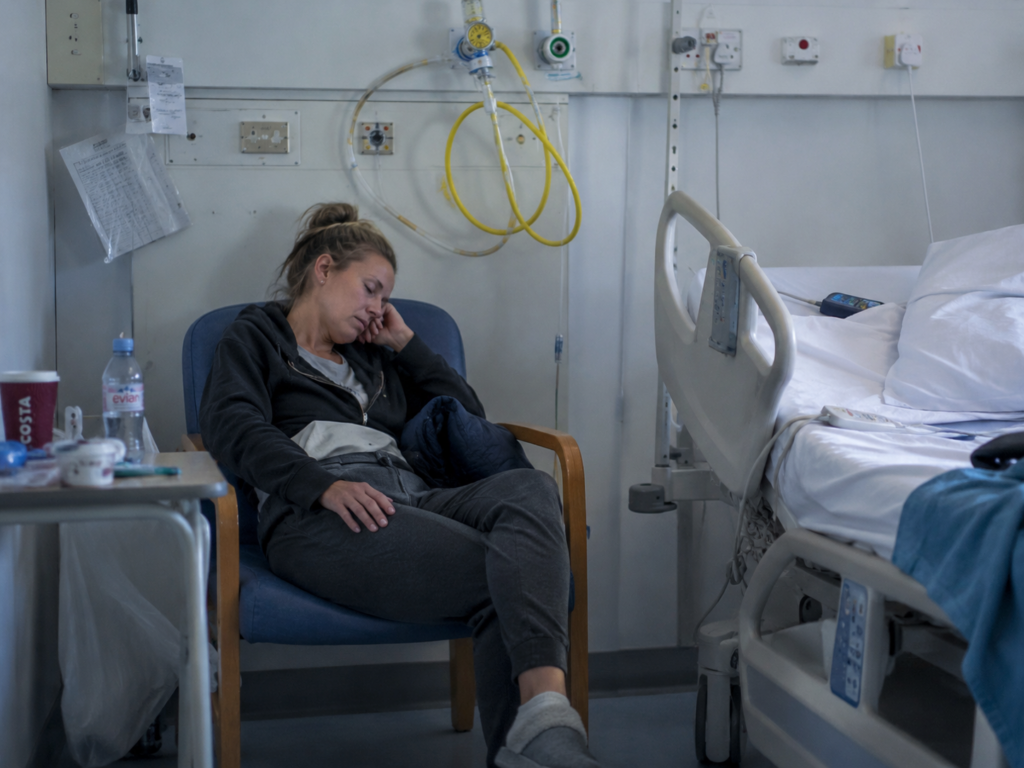
When someone you love is in hospital, it can feel impossible to think about your own needs. Your focus is naturally on them – their treatment, their comfort, and hoping for good news. Many parents and family members spend long hours, or even days and nights, at a hospital bedside, often sacrificing sleep, meals, and moments of rest.
While this response is completely understandable, looking after yourself is not selfish. Your wellbeing plays an important role in helping you stay present, make decisions, and continue supporting your loved one. Even small acts of self-care can make a meaningful difference during what may be one of the most challenging times of your life.
Why Looking After Yourself Matters
Stress affects both the mind and body. When you’re running on very little sleep, you may find it harder to concentrate, remember information, regulate emotions, or make important decisions.
Hospital staff understand that family members are under immense pressure. Many encourage parents and carers to take breaks, eat regular meals, and get some rest whenever possible. Looking after yourself isn’t taking attention away from your loved one—it helps you continue being there for them.
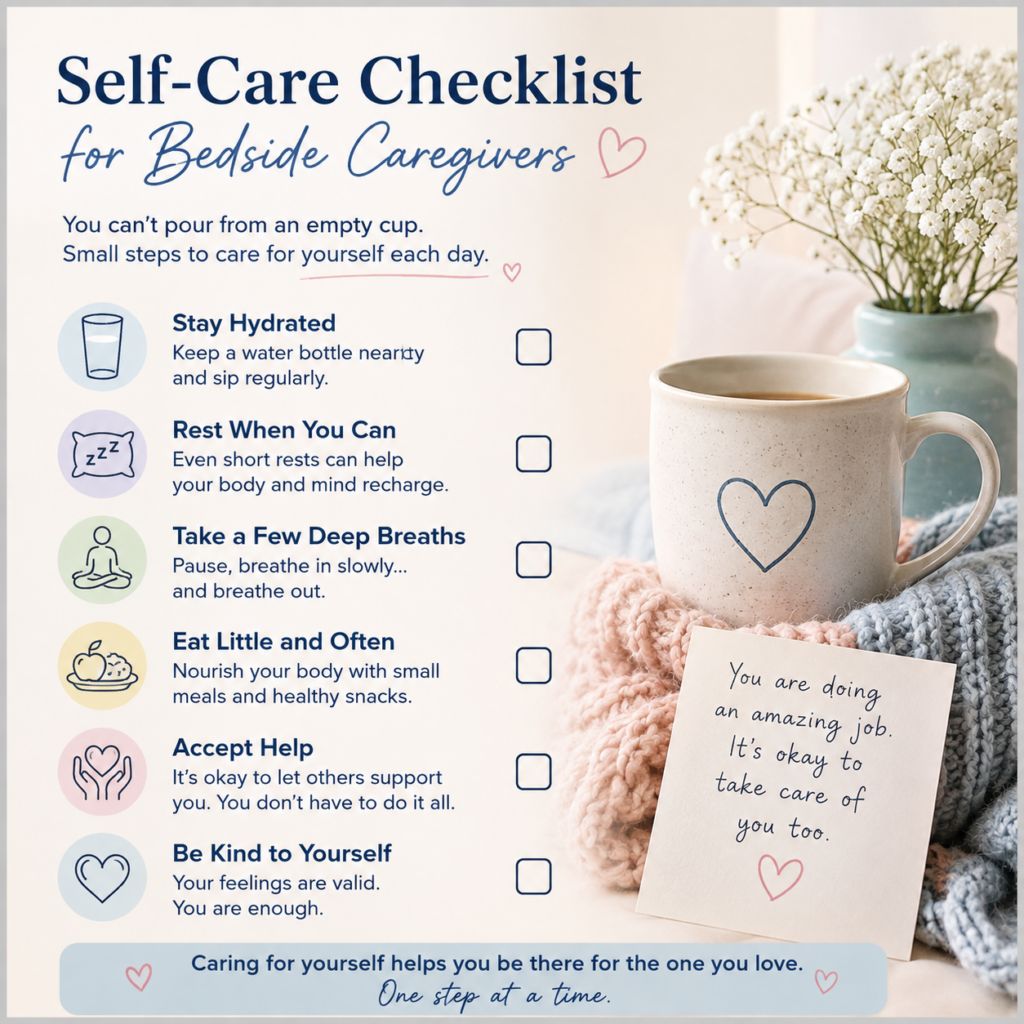
Remember: you cannot pour from an empty cup.
Sleep May Not Be Perfect – Aim for Rest
Sleeping in a hospital environment is rarely easy. Bright lights, medical equipment, overnight observations, unfamiliar surroundings, and constant worry can all interrupt sleep.
Rather than expecting a full night’s rest, focus on getting rest whenever opportunities arise.
Some ideas include:
- Resting while your loved one is asleep.
- Using blankets or pillows provided by the hospital if available.
- Bringing comfortable clothing or an extra layer to stay warm.
- Using earplugs or an eye mask if it’s safe and appropriate.
- Listening to calming music or a guided relaxation exercise through headphones.
Even short periods of sleep can help improve concentration and reduce feelings of exhaustion.
Create Small Moments of Calm
When emotions are running high, your body can remain in a constant state of alertness. Finding small moments to pause can help reduce stress.
You might try:
- Taking five slow, deep breaths.
- Stepping outside for fresh air.
- Stretching your shoulders and neck.
- Drinking a warm cup of tea.
- Listening to calming music.
- Writing your thoughts in a notebook.
These simple activities won’t remove the situation you’re facing, but they can help lower stress levels and give your mind a brief opportunity to reset.
Eat and Drink Regularly
It’s common for families to skip meals or forget to drink enough water during long hospital stays.
Your body needs fuel, particularly during periods of emotional stress.
Try to:
- Keep a reusable water bottle nearby.
- Accept offers of meals from friends or relatives.
- Carry healthy snacks such as fruit, nuts, or cereal bars.
- Eat little and often if you don’t feel hungry.
Looking after your physical health supports your emotional wellbeing too.
Keep Moving When You Can
Sitting beside a hospital bed for hours at a time can leave your body feeling stiff and tired.
If possible, take a short walk around the hospital or outside. Gentle movement can:
- Improve circulation.
- Reduce muscle tension.
- Help clear your mind.
- Support better sleep later.
Even standing up, stretching, or walking along the corridor for a few minutes can help.
Accept Help From Others
Many people want to help but don’t know how.
If friends or family offer support, consider accepting practical help such as:
- Bringing meals or snacks.
- Looking after pets.
- Collecting prescriptions.
- Driving you to and from the hospital.
- Sitting with your loved one while you take a short break.
Accepting help doesn’t mean you’re coping less well. It means you’re recognising that difficult situations are easier to face with support.
Stay Connected
Being in hospital can feel isolating, particularly during long admissions.
Keeping in touch with trusted friends or family members – even through a short phone call or text message – can provide comfort and reduce feelings of loneliness.
You don’t have to carry everything on your own.
Be Kind to Yourself
It’s normal to experience a wide range of emotions.
You may feel:
- Fear
- Sadness
- Frustration
- Guilt
- Hope
- Relief
- Exhaustion
These feelings can change from hour to hour. There is no “right” way to respond during a stressful hospital stay.
Try not to judge yourself for needing rest or feeling overwhelmed. You’re navigating an incredibly difficult situation.
Know When You Need Extra Support
Sometimes stress becomes more than temporary worry.
Consider speaking with your GP, a hospital wellbeing service, or a mental health professional if you find that:
- You’re unable to sleep for several nights.
- Anxiety feels overwhelming.
- You’re struggling to eat or function.
- You feel persistently low or hopeless.
- You’re finding it difficult to cope once you return home.
Seeking support is a sign of strength, not weakness. Help is available, and you don’t have to face these feelings alone.
Is it normal to struggle with sleep in hospital?
Yes. Noise, lighting, frequent interruptions, and emotional stress can all make it difficult to sleep. Even short periods of rest can help you cope.
Should I leave the bedside to take a break?
If it’s safe to do so, taking short breaks can benefit both your physical and emotional wellbeing. Hospital staff can often advise on suitable times.
What if I feel guilty about looking after myself?
Many parents and carers experience guilt, but caring for yourself helps you remain physically and emotionally able to support your loved one.
What should I pack for a long hospital stay?
Comfortable clothing, toiletries, phone charger, medications, snacks, water bottle, notebook, headphones, and any comfort items that help you relax.
How can family and friends help?
They can provide meals, transport, childcare, pet care, practical errands, or simply be someone to listen when you need to talk.
When should I ask for professional support?
If stress, anxiety, or low mood become overwhelming or continue after the hospital stay, speak with your GP or ask the hospital team about available wellbeing services.
Supporting someone in hospital is an act of love, but it can also be emotionally and physically demanding. While your attention will naturally be on the person you’re caring for, taking moments to rest, eat, move, and accept help allows you to continue supporting them with strength and compassion.
Looking after yourself isn’t stepping away from your loved one – it’s helping ensure you can be there for them, today and in the days ahead.