

Talking with a doctor can sometimes feel overwhelming, especially when you’re worried about your own health or the wellbeing of someone you love. Appointments are often short, emotions can run high, and it’s easy to leave feeling like you forgot to ask something important.
The good news is that you don’t need medical knowledge to have productive conversations with healthcare professionals. Preparing a few questions, speaking honestly about your concerns, and making sure you understand the answers can help you feel more informed and involved in decisions about care. The NHS encourages patients to ask questions, take notes, and request clarification whenever something isn’t clear.
Why Good Communication Matters
Healthcare works best when patients, families, and medical professionals work together.
Doctors bring medical expertise, while you bring something equally valuable: knowledge about your symptoms, experiences, concerns, and goals. Sharing this information openly helps healthcare professionals understand the full picture and recommend the most appropriate care.
Good communication can help you:
- Better understand your condition
- Feel more confident in treatment decisions
- Reduce misunderstandings
- Know what to expect next
- Feel heard and supported throughout your healthcare journey
Prepare Before Your Appointment
A little preparation can make a big difference.
Before you attend your appointment, consider writing down:
- Your main symptoms and when they started
- Any changes you’ve noticed
- Medications, supplements, or treatments you’re using
- Previous test results or hospital visits
- Questions you don’t want to forget
If several issues need discussing, prioritise the most important ones first. This helps ensure your biggest concerns are addressed, particularly if time is limited.
Bringing a notebook – or using your phone to keep notes – can also help you remember key information afterwards.
Questions Worth Asking
There is no such thing as a “silly question” when it comes to your health.
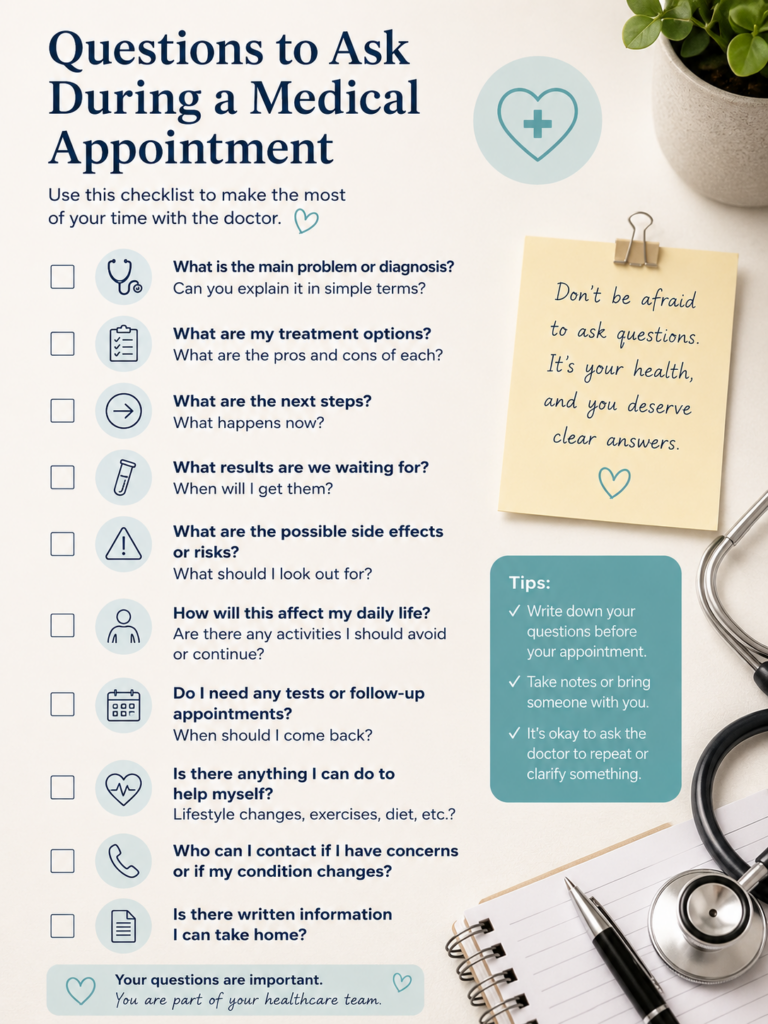
Some useful questions include:
About Your Condition
- What do you think might be causing these symptoms?
- Are there other possible explanations?
- Is this likely to improve on its own?
About Tests
- Why is this test needed?
- What will the results tell us?
- When and how will I receive the results?
About Treatment
- What treatment options are available?
- What are the benefits and possible risks?
- Are there alternatives?
- What happens if I decide to wait?
About Recovery
- What should I expect over the next few days or weeks?
- Are there warning signs I should watch for?
- When should I seek further medical help?
These types of questions can help you understand your care and make informed decisions alongside your healthcare team.
If You Don’t Understand, Ask Again
Medical terminology can be confusing.
If your doctor uses words you don’t recognise, it’s perfectly acceptable to say:
- “Could you explain that another way?”
- “Can you tell me what that means?”
- “I’d like to make sure I’ve understood.”
Healthcare professionals expect questions and generally want patients to leave with a clear understanding of their care. NICE also recommends that information should be explained in plain language and that patients should have opportunities to ask questions throughout the consultation.
Speak Up About Your Concerns
Sometimes people worry about “wasting the doctor’s time” or being seen as difficult.
Your concerns matter.
If something worries you – even if it seems small – mention it. Likewise, if your symptoms have changed, become worse, or aren’t improving as expected, tell your healthcare professional.
Being honest about how symptoms affect daily life can provide valuable information that supports better decision-making.
Bringing Someone With You
Many people find it helpful to bring a trusted family member or friend to appointments.
They can:
- Help remember information
- Take notes
- Ask questions you may not think of
- Offer emotional support
- Help explain concerns if you’re feeling anxious
If communication is difficult because of language, hearing, learning disabilities, or other needs, you can also ask about interpreters or communication support. The NHS encourages reasonable adjustments to help everyone participate in decisions about their care.
Before You Leave
Before your appointment ends, make sure you know:
- What the likely diagnosis is (if known)
- Whether you need tests
- When results will arrive
- Whether medication has changed
- What happens next
- Who to contact if your symptoms change
A simple question like:
“Can I just check I’ve understood everything correctly?”
can help confirm you’ve understood the plan.
Supporting a Child or Loved One
Parents and carers often need to speak on behalf of children or family members.
It can help to:
- Write down symptoms beforehand.
- Keep a timeline of when changes occurred.
- Share any concerns honestly.
- Encourage older children to answer questions themselves where appropriate.
- Ask your child or loved one afterwards if they have questions they forgot to mention.
Remember that healthcare is a partnership, and families play an important role in providing information that may not be obvious during a short appointment.
When You Feel Something Isn’t Right
Most medical appointments lead to clear next steps, but sometimes you may leave feeling uncertain.
If you’re still worried:
- Arrange a follow-up appointment.
- Ask for clarification.
- Request more information.
- Seek a second opinion when appropriate.
Continuing to ask respectful questions is an important part of shared decision-making and helps ensure you understand your options.
Frequently Asked Questions
Is it okay to write my questions down before seeing a doctor?
Yes. Writing questions in advance helps ensure you remember everything you want to discuss and makes appointments more productive.
What if I forget what the doctor said?
Take notes during the appointment or ask someone to come with you. You can also ask your doctor to repeat or explain important information before you leave.
Can I ask for more time if I have several concerns?
If you have multiple issues to discuss, let the practice know when booking your appointment. In some cases, they may recommend a longer appointment or arranging a follow-up.
Should I ask about treatment alternatives?
Absolutely. Understanding different options, including benefits and risks, helps you make informed decisions about your care.
Is it okay to ask for a second opinion?
Yes. If you feel uncertain about a diagnosis or treatment plan, discussing a second opinion with your healthcare professional is appropriate.
Can I bring someone with me?
Yes. Many patients bring a trusted friend or family member for support, note-taking, or help asking questions.
Conclusion
Feeling confident when talking with doctors doesn’t require medical expertise—it starts with preparation, honesty, and asking questions. Whether you’re attending an appointment for yourself or supporting someone you love, taking an active role in conversations can help you better understand your healthcare and make informed decisions together with your medical team.
By preparing in advance, speaking openly, and making sure you understand the next steps, you’ll be better equipped to make the most of every appointment.